
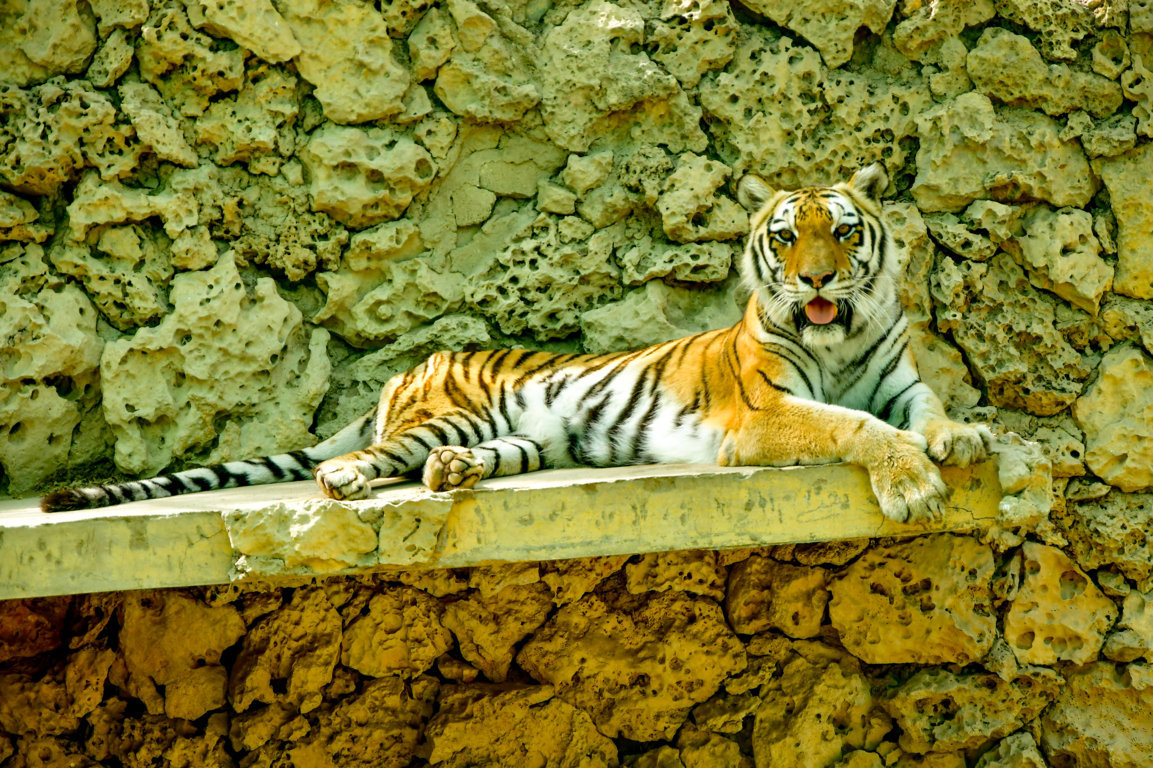
Richel (19-20 Years Old)
HABITAT
Bengal, Bhutan, Asam, Nepal
DIET
Meat
LITTER SIZE
3-5 Nos.
GESTATION PERIOD
3-4 Months
AVERAGE LIFE SPAN
20 Years
AGE AT KARACHI ZOO
19-20 Years
Inducted in Karachi Zoo in June, 2012 age approximately 19-20 years name given by Zoo Administration as ‘Richel’
The Bengal tiger, scientifically known as Panthera tigris, is a majestic and powerful big cat native to the Indian subcontinent. Distinguished by its striking orange coat with black stripes, it is the most numerous tiger subspecies. They are primarily solitary creatures, with males and females coming together only for mating. These tigers are excellent swimmers and often cool off in pools and streams. They play a vital role in maintaining the health and balance of their ecosystem. Bengal tigers also hold cultural significance in many regions, symbolizing strength and courageous.
Overview
The Bengal tiger (Panthera tigris tigris) is one of the most iconic and majestic big cats in the world, symbolizing power and beauty. Native to the Indian subcontinent, Bengal tigers inhabit a variety of habitats, including tropical forests, grasslands, and mangrove swamps. These tigers are known for their striking orange coats with black stripes, making them easily recognizable and a favorite among wildlife enthusiasts.
Physical Characteristics
Appearance
Bengal tigers are the largest members of the cat family and exhibit a distinctive color pattern:
- Size: Adult males typically weigh between 400 to 570 pounds (180 to 260 kilograms) and measure about 9 to 10 feet (2.7 to 3.1 meters) in length, including the tail. Females are slightly smaller, weighing between 220 to 350 pounds (100 to 160 kilograms).
- Coat: Their fur is a rich orange color with black vertical stripes unique to each individual. The underparts are white, and some tigers may have white markings around their eyes and on their faces.
- Eyes: Bengal tigers have keen vision with yellow or amber eyes, which are adapted for night hunting.
Adaptations
Several physical and behavioral adaptations make Bengal tigers effective predators:
- Powerful Build: They have muscular bodies and strong limbs, enabling them to take down large prey.
- Sharp Claws and Teeth: Their retractable claws and sharp teeth are essential for catching and killing prey.
- Camouflage: The tiger’s striped coat provides excellent camouflage in their forest and grassland habitats, breaking up their outline and making them less visible to both prey and predators.
Habitat
Range
Bengal tigers are found primarily in India, with smaller populations in Bangladesh, Nepal, Bhutan, and Myanmar:
- Tropical and Subtropical Forests: Dense forests provide cover and abundant prey.
- Grasslands and Savannas: These open areas offer hunting grounds for tigers.
- Mangrove Swamps: The Sundarbans mangrove forest, straddling India and Bangladesh, is home to a unique population of tigers adapted to this coastal environment.
Habitat Preferences
Bengal tigers are highly adaptable and can live in a variety of environments, provided there is sufficient prey and cover:
- Dense Vegetation: They prefer areas with dense vegetation for stalking prey.
- Water Sources: Proximity to water is crucial, as tigers are strong swimmers and often use water bodies for cooling off and hunting.
Diet and Hunting
Carnivorous Diet
Bengal tigers are apex predators, primarily feeding on large mammals:
- Primary Prey: Their diet includes deer (such as chital and sambar), wild boar, and gaur. In the Sundarbans, they may also prey on fish and other marine animals.
- Secondary Prey: They can also hunt smaller animals like birds, monkeys, and reptiles when larger prey is scarce.
Hunting Techniques
Bengal tigers are solitary hunters, relying on stealth and power:
- Stalking: They use their striped coats as camouflage to blend into the vegetation, approaching their prey silently.
- Ambush and Attack: Tigers launch a surprise attack, often targeting the throat or neck of their prey to deliver a fatal bite.
- Feeding: After a successful hunt, tigers drag their kill to a secluded spot to eat. They can consume up to 88 pounds (40 kilograms) of meat in one meal.
Behavior and Social Structure
Solitary Lifestyle
Bengal tigers are primarily solitary animals, with adults coming together only for mating:
- Territoriality: Each tiger has a defined territory, which it marks with scent markings, urine, and scratch marks on trees.
- Home Range: Male territories are larger and often overlap with those of several females, while female territories are smaller and typically overlap with their offspring’s.
Communication
Tigers communicate using vocalizations, scent markings, and body language:
- Vocalizations: Tigers produce a range of sounds, including roars, growls, chuffs, and moans. Roaring helps establish territory and communicate with other tigers over long distances.
- Scent Marking: They use scent glands on their cheeks and the base of their tails to mark territory and signal reproductive status.
Reproduction
Bengal tigers have specific mating and reproductive behaviors:
- Mating Season: Tigers do not have a specific mating season, but mating peaks between November and April.
- Gestation and Birth: The gestation period is about 3.5 months, with females giving birth to 2 to 4 cubs in a secluded den.
- Raising Young: Tiger cubs are born blind and helpless, relying on their mother for warmth and food. They stay with their mother for about 2 to 3 years, learning essential survival skills before becoming independent.
Conservation Status
Threats
Bengal tigers face numerous threats that have led to their declining populations:
- Habitat Loss: Deforestation, agricultural expansion, and urbanization reduce their natural habitats.
- Poaching: Tigers are poached for their skin, bones, and other body parts, which are used in traditional medicine and as status symbols.
- Human-Wildlife Conflict: Tigers sometimes prey on livestock, leading to retaliatory killings by local communities.
Conservation Efforts
Conservation initiatives are critical to protect Bengal tigers:
- Protected Areas: Establishing and managing national parks, wildlife sanctuaries, and tiger reserves help safeguard their habitats.
- Anti-Poaching Measures: Enhanced law enforcement and community engagement aim to reduce poaching and illegal trade.
- Community Involvement: Working with local communities to promote coexistence and provide alternative livelihoods helps mitigate human-wildlife conflict.
Fun Facts
- Night Hunters: Tigers are primarily nocturnal, using their excellent night vision to hunt in the dark.
- Swimming Skills: Unlike many other cats, Bengal tigers are strong swimmers and enjoy spending time in the water to cool off.
- Roar Power: A tiger’s roar can be heard up to 2 miles (3 kilometers) away, serving as a powerful tool for communication and territorial defense.
By understanding the unique characteristics and ecological importance of Bengal tigers, visitors can appreciate these majestic creatures and support efforts to conserve them for future generations.