
HABITAT
Europe
DIET
Lucerne Grass, Grains Wheat Brawn, Channa Chilka, Daal Chana, Jiggery
LITTER SIZE
1 No.
GASTATION PERIOD
230 Days
AVERAGE LIFE SPAN
12-16 Years
APPARENT AGE AT KARACHI ZOO
9 years
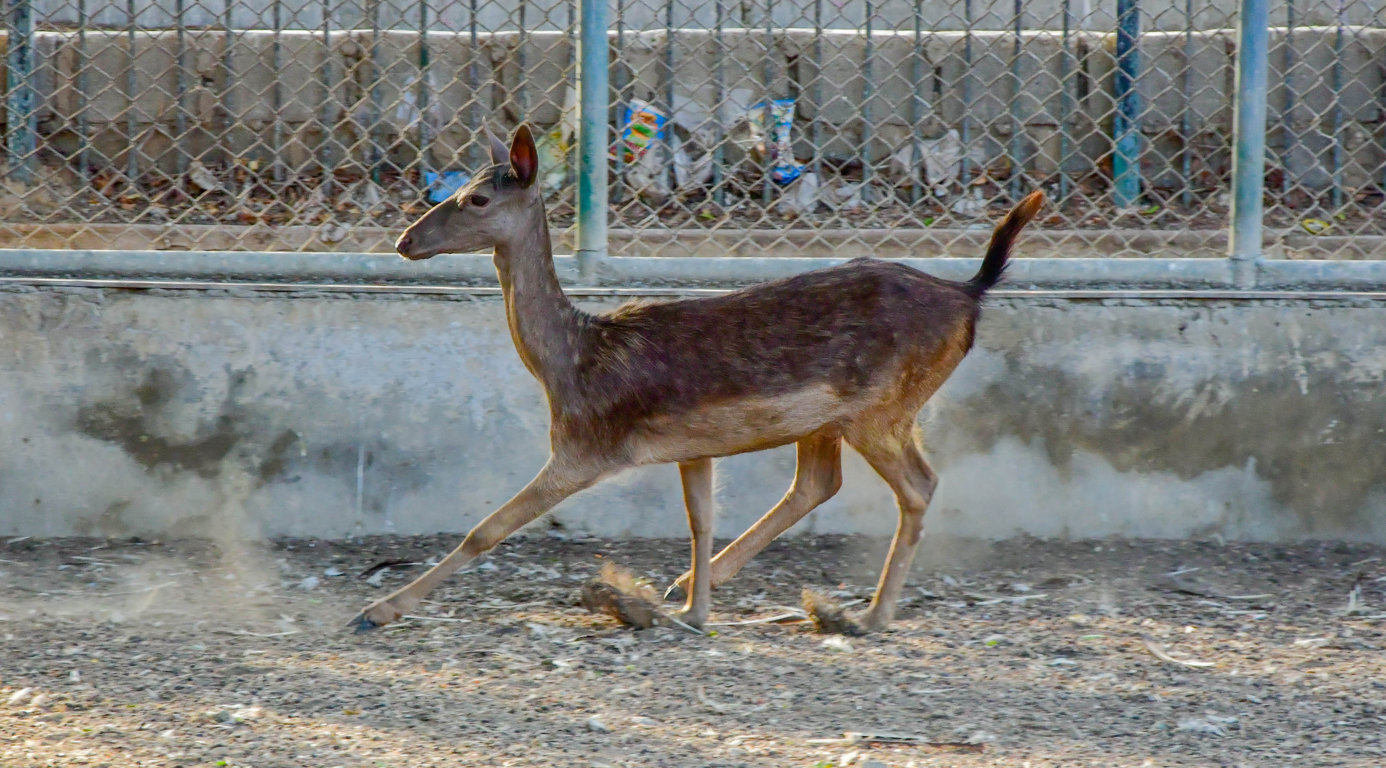
Hog Deer (axis porcinus) are a species of deer native to the Indian sub-continent and south east Asia. They are social animals living in small herds, herbivores feeding on grasses leaves and crops.
Overview
The Hog Deer (Axis porcinus), named for its pig-like appearance and behavior, is a small and sturdy deer native to the Indian subcontinent and Southeast Asia. Known for its distinctive physical traits and unique adaptations, the Hog Deer thrives in grasslands and wetland habitats. These deer are relatively shy and elusive, making them fascinating subjects for wildlife enthusiasts.
Physical Characteristics
Appearance
Hog Deer are characterized by their robust build and distinctive features:
- Size: Hog Deer are small to medium-sized deer, with males standing about 26 to 30 inches (66 to 76 centimeters) at the shoulder and weighing between 88 to 110 pounds (40 to 50 kilograms). Females are slightly smaller.
- Coloration: Their coat is a rich brown color, which can vary seasonally, becoming lighter in the summer and darker in the winter. They have a lighter underbelly and a white throat patch.
- Antlers: Males possess relatively short, three-tined antlers that curve inward, resembling the tusks of a hog, which contributes to their name.
- Body Shape: They have a stocky build, short legs, and a low-slung body, giving them a pig-like appearance when moving through dense vegetation.
Adaptations
Several adaptations help Hog Deer survive in their environments:
- Cryptic Coloration: Their brown coat provides excellent camouflage in their grassy and forested habitats.
- Short Legs: Their short, sturdy legs are adapted for moving through thick underbrush and marshy terrain.
- Flight Response: When threatened, Hog Deer often “hog” or “plough” through vegetation, running with their head low and tail up, which helps them navigate dense environments quickly.
Habitat
Range
Hog Deer are native to a range that spans the Indian subcontinent and parts of Southeast Asia:
- Geographic Range: They are found in India, Nepal, Bangladesh, Myanmar, Thailand, Cambodia, and Vietnam. Small introduced populations exist in Australia and the United States.
- Habitat Preferences: They inhabit grasslands, floodplains, and wetland areas, often near rivers and lakes.
Habitat Preferences
Hog Deer prefer habitats that provide cover and abundant food sources:
- Grasslands and Meadows: Open grassy areas provide ample grazing opportunities.
- Wetlands and Floodplains: Wetlands offer both food and cover, with abundant vegetation and water sources.
- Riparian Zones: Areas along rivers and streams provide shelter and access to water.
Diet and Foraging
Herbivorous Diet
Hog Deer are herbivores, with a diet consisting mainly of grasses and other vegetation:
- Grasses and Herbs: They primarily feed on a variety of grasses, supplemented by herbs, leaves, and shoots.
- Aquatic Plants: In wetland areas, they consume aquatic plants and reeds.
- Seasonal Variation: Their diet can vary seasonally based on the availability of different plant species.
Foraging Behavior
Hog Deer are most active during dawn and dusk, exhibiting crepuscular foraging behavior:
- Grazing: They spend a significant amount of time grazing in open areas, often near cover.
- Feeding in Cover: They prefer to stay close to dense vegetation, which provides protection from predators.
Behavior and Social Structure
Solitary and Social Behavior
Hog Deer exhibit a mix of solitary and social behaviors:
- Solitary Males: Adult males are generally solitary, especially outside of the breeding season.
- Female Groups: Females and their young may form small groups, often seen feeding and resting together.
- Breeding Season: During the rut, males become more social and compete for access to females.
Communication
Hog Deer communicate using vocalizations, body language, and scent marking:
- Vocalizations: They produce a variety of sounds, including barks and grunts, to communicate alarm, aggression, and social interactions.
- Body Language: Postures and movements, such as head bobbing and tail flicking, are used in social interactions and to signal alertness.
- Scent Marking: Males use scent from glands on their face and legs to mark territory and signal reproductive status.
Reproduction
Reproductive behaviors and cycles are key aspects of Hog Deer life:
- Breeding Season: The breeding season, or rut, occurs in the late autumn and early winter.
- Courtship: Males engage in displays and fights to establish dominance and win mates.
- Gestation and Birth: After a gestation period of about 6 to 7 months, females give birth to a single fawn, which is hidden in dense vegetation for the first few weeks of life to avoid predators.
Conservation Status
Threats
Hog Deer face several threats that impact their populations:
- Habitat Loss: Agricultural expansion, urbanization, and habitat fragmentation reduce their natural habitats.
- Hunting and Poaching: They are hunted for their meat, hide, and antlers, which has led to population declines in some areas.
- Predation: Natural predators include tigers, leopards, and wild dogs, which primarily target young and vulnerable individuals.
Conservation Efforts
Efforts to protect Hog Deer include:
- Protected Areas: Establishing and managing wildlife sanctuaries and national parks help conserve their habitats.
- Legal Protections: Enforcement of hunting bans and anti-poaching laws aim to reduce illegal hunting.
- Community Engagement: Involving local communities in conservation efforts and promoting eco-tourism can help protect Hog Deer populations.
Fun Facts
- Unique Naming: The name “Hog Deer” comes from their pig-like manner of running through underbrush with their head down.
- Excellent Swimmers: They are strong swimmers and can often be seen swimming across rivers and lakes.
- Elusive Nature: Hog Deer are known for their shy and elusive behavior, making them a challenge to spot in the wild.
By understanding the unique characteristics and ecological importance of Hog Deer, visitors can appreciate these fascinating animals and support efforts to conserve them for future generations.