
HABITAT
Madagascar
DIET
Fruits, Vegetables
LITTER SIZE
2-3 Nos.
GESTATION PERIOD
60-65 Days
AVERAGE LIFE SPAN
15-14 Years
AGE AT KARACHI ZOO
15 years
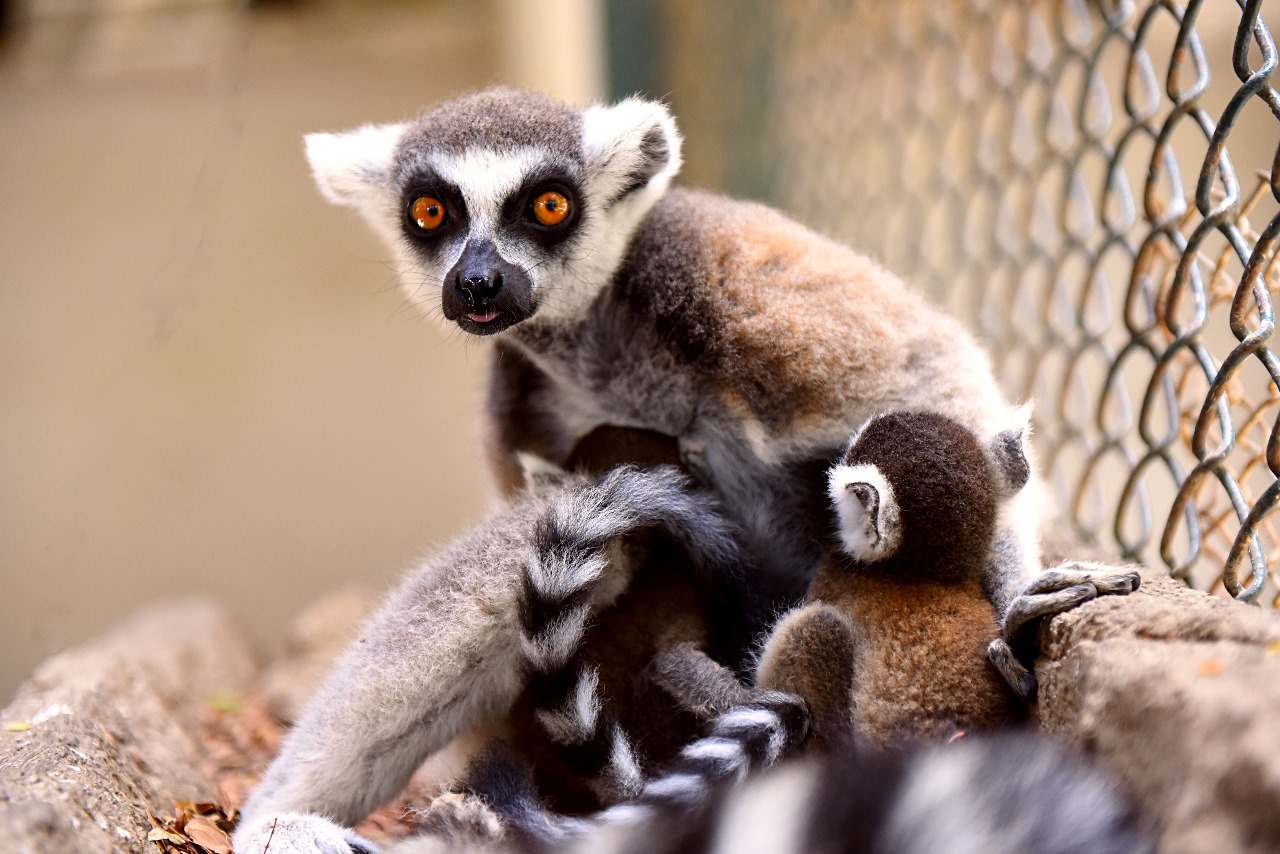
In 2013, inducted in Karachi Zoo as a result of confiscation by Pakistan Custom. Since then this Madagascar species living in Karachi Zoo.
Overview
Lemur Catta, commonly known as the Ring-tailed Lemur, is a charismatic primate species endemic to the island of Madagascar. Recognized for its distinctively ringed tail and expressive facial features, the Ring-tailed Lemur is a social and arboreal species that inhabits various forested and semi-arid regions of Madagascar. It is known for its unique behaviors, social structures, and adaptations to its environment.
Physical Characteristics
Appearance
Ring-tailed Lemurs are easily identifiable by their appearance:
- Body Size: They are medium-sized lemurs, with males and females averaging about 15 to 18 inches (38 to 45 centimeters) in body length.
- Tail: Their long, bushy tail is longer than their body, measuring up to 22 inches (56 centimeters) and adorned with alternating black and white rings.
- Fur: They have dense, soft fur that varies in coloration from gray to reddish-brown, with white underparts and distinctive facial markings.
Coloration
Their coat has specific patterns:
- Facial Mask: They have a triangular black mask around their eyes, giving them a striking appearance.
- Ringed Tail: The tail has 13 to 14 alternating black and white rings, with a bushy, tufted tip.
Habitat
Range
Ring-tailed Lemurs are native to Madagascar:
- Geographic Range: They inhabit various habitats across southern and southwestern Madagascar, including dry deciduous forests, gallery forests, and semi-arid regions.
- Adaptability: They are adaptable and can also be found in disturbed habitats, including agricultural lands and forest edges.
Habitat Preferences
Ring-tailed Lemurs are adapted to their specific habitats:
- Arboreal Lifestyle: They spend most of their time in trees, moving adeptly among branches and using their long tails for balance.
- Ground Foraging: They also descend to the ground to search for food and engage in social behaviors.
Diet and Foraging
Omnivorous Diet
Ring-tailed Lemurs have a diverse diet:
- Plant Matter: They primarily feed on fruits, leaves, flowers, and young shoots.
- Invertebrates: They also consume insects, spiders, and small vertebrates as supplementary protein sources.
- Seasonal Variation: Their diet may vary seasonally based on food availability and nutritional needs.
Foraging Behavior
They exhibit unique foraging strategies:
- Group Foraging: They often forage in small to medium-sized groups, using their keen sense of smell and agile climbing skills to locate and harvest food resources.
- Sunning: They engage in sunning behavior, sitting upright and basking in the morning sun to warm up before becoming active.
Behavior and Social Structure
Social Behavior
Ring-tailed Lemurs are highly social primates:
- Group Structure: They live in multi-male, multi-female groups known as troops, typically consisting of 10 to 30 individuals.
- Hierarchy: Troops have a hierarchical social structure, with dominant females often leading and making group decisions.
Communication
Communication among Ring-tailed Lemurs is multifaceted:
- Vocalizations: They produce a variety of calls, including chirps, clicks, and alarm calls, to communicate danger, location, and social status.
- Scent Marking: They use scent glands located on their wrists to mark territories and communicate reproductive status.
Reproduction
Reproductive behavior is seasonal:
- Mating Season: Breeding typically occurs during the cooler, drier months of the year.
- Gestation and Birth: Females give birth to a single offspring after a gestation period of about 135 days.
- Infant Care: Infants cling to their mother’s belly for the first few weeks before transitioning to riding on her back, where they receive protection and learn essential behaviors.
Conservation Status
Threats
Ring-tailed Lemurs face several threats that impact their populations:
- Habitat Loss: Deforestation, agricultural expansion, and charcoal production reduce their natural habitats.
- Illegal Pet Trade: They are sometimes captured for the illegal pet trade, despite legal protections.
- Climate Change: Changing climatic conditions and extreme weather events affect food availability and habitat suitability.
Conservation Efforts
Efforts to protect Ring-tailed Lemurs include:
- Protected Areas: Establishing and managing protected parks and reserves to conserve their habitats.
- Community Involvement: Involving local communities in conservation efforts and promoting sustainable land use practices.
- Research and Education: Conducting research on population dynamics, behavior, and ecology to inform conservation strategies and raise awareness.
Fun Facts
- Social Grooming: Ring-tailed Lemurs engage in social grooming, where they groom each other’s fur to reinforce social bonds and remove parasites.
- Distinctive Postures: They display unique behaviors, such as “stink fighting,” where males engage in scent marking by rubbing their tails on scent glands and wafting the odor toward rivals.
- Cultural Significance: In Malagasy culture, Ring-tailed Lemurs hold symbolic significance and are revered as ancestral spirits in some regions.
By understanding the unique characteristics and ecological roles of Ring-tailed Lemurs, visitors can appreciate these fascinating primates and support efforts to conserve them for future generations.