
HABITAT
Turkey, America, Azebaijan, iran
DIET
Lucerne Grass, Grains Wheat Brawn, Channa Chilka, Daal Chana, Jaggery
LITTER SIZE
1 No.
GESTATION PERIOD
5 Months
AVERAGE LIFE SPAN
23 Years
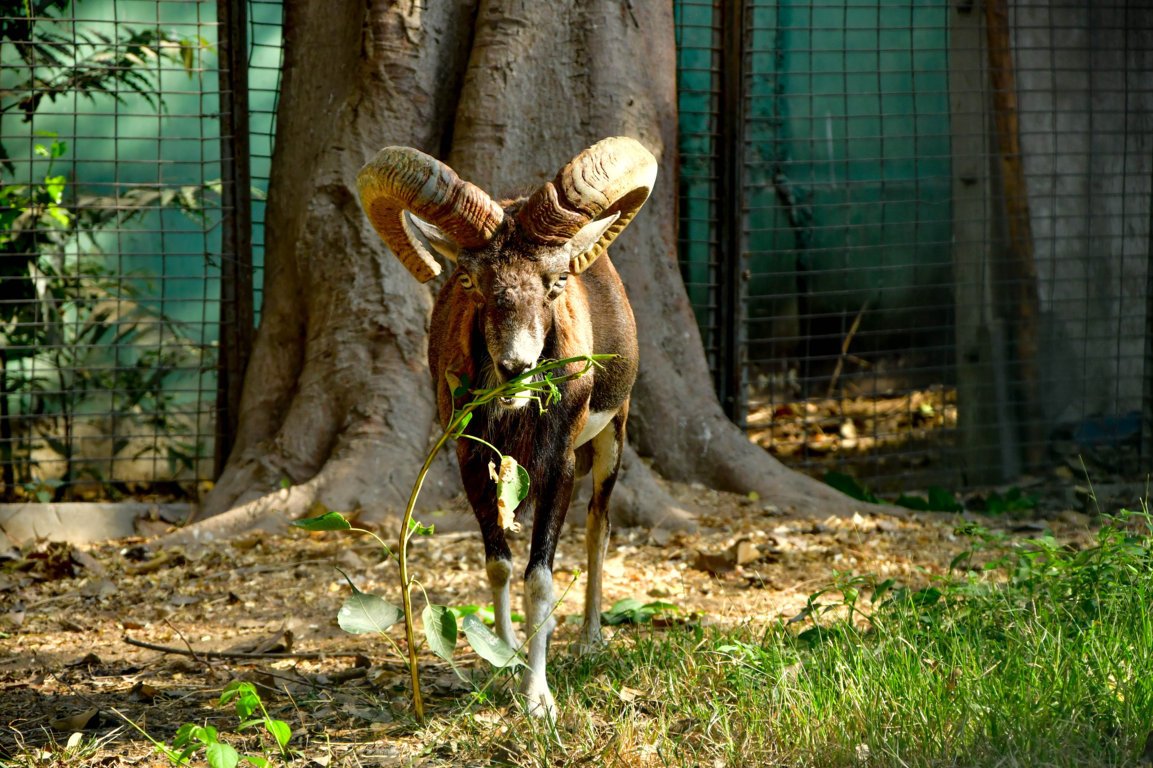
The Mouflon is majestic and iconic wild sheep characterized by distinctive crave horn and reddish brown coat, their horn can grow upto 3.3 feet. They are skilled climber.
Overview
The Mouflon (Ovis orientalis) is a wild sheep species native to mountainous regions of Europe and Asia. Known for their robust build, striking horns, and adaptive behavior, Mouflons are considered one of the ancestors of modern domestic sheep. They play an essential ecological role as herbivores, shaping vegetation and contributing to biodiversity in their native habitats.
Physical Characteristics
Appearance
Mouflons exhibit distinct physical traits:
- Size: They are medium-sized sheep, with males (rams) typically larger and heavier than females (ewes).
- Coat: Their dense fur varies in color from reddish-brown to dark brown, with a pale patch on the rump and underparts.
- Horns: Both males and females have horns, which are curved and spiral, with males’ horns typically larger and more robust than females’.
Adaptations
Mouflons are well-adapted to mountainous habitats:
- Agility: They are agile climbers and jumpers, navigating steep terrain and rocky slopes with ease.
- Seasonal Adaptations: Their thick fur provides insulation against cold temperatures, while their ability to find shelter in rocky outcrops and caves aids in weathering harsh conditions.
Habitat
Range
Mouflons inhabit mountainous and forested regions:
- Geographic Distribution: They are found in Europe, including Corsica, Sardinia, and parts of Turkey, as well as in parts of Asia, such as Iran and Iraq.
- Habitat Preferences: Mouflons prefer open woodlands, grassy meadows, and rocky slopes at elevations ranging from 300 to 2,000 meters (1,000 to 6,500 feet).
Habitat Preferences
They exhibit habitat specificity based on seasonal changes:
- Feeding Areas: Mouflons graze on grasses, herbs, and browse on leaves, twigs, and shrubs, adapting their diet to available vegetation and seasonal changes.
- Water Sources: They require access to water sources such as streams or springs, supplementing moisture intake through dew and plant moisture.
Diet and Feeding
Herbivorous Diet
Mouflons are herbivores with specific dietary habits:
- Primary Diet: They primarily feed on grasses, herbs, shrubs, and flowering plants, selecting nutritious plant parts for consumption.
- Foraging Behavior: Mouflons use their keen senses of smell and sight to locate food sources, foraging during dawn and dusk to avoid predators.
Feeding Behavior
They exhibit selective feeding habits:
- Browsing: Mouflons use their prehensile lips to select and consume preferred plant parts, aiding in nutrient intake and digestion.
- Grazing: They graze on grasslands and meadows, maintaining vegetation health and contributing to ecosystem dynamics through their feeding habits.
Behavior and Social Structure
Social Behavior
Mouflons exhibit social hierarchy and group dynamics:
- Group Structure: They form mixed-sex herds consisting of females, juveniles, and a dominant male (ram), with younger males forming bachelor groups.
- Mating Behavior: During the breeding season (rut), dominant rams compete for access to females through vocal displays and horn clashes.
Communication
Communication among Mouflons involves vocalizations and visual cues:
- Vocal Calls: They use bleats, grunts, and alarm calls to communicate danger, social status, and reproductive readiness.
- Visual Signals: Horn displays, head movements, and body postures convey dominance, submission, and territorial boundaries within herds.
Reproduction
Reproductive behavior follows seasonal patterns:
- Breeding Season: The rut occurs in autumn, with peak mating activity and aggressive displays among males vying for mating rights.
- Gestation and Birth: After a gestation period of about 5 months, females give birth to a single lamb (rarely twins) in spring, ensuring offspring survival during favorable weather and food conditions.
Parental Care
Females provide maternal care:
- Nurturing Offspring: They nurse and protect their young in secluded areas, teaching essential survival skills such as hiding from predators and foraging techniques.
Conservation Status
Population and Conservation
Mouflon populations are stable with conservation measures:
- Protected Areas: They thrive in national parks, reserves, and managed habitats, contributing to local biodiversity and ecosystem health.
- Hunting and Management: Sustainable hunting practices and population management ensure balanced wildlife populations and habitat conservation.
- Genetic Diversity: Maintaining genetic diversity through breeding programs and habitat conservation efforts supports long-term population sustainability.
Fun Facts
- Ancient Domestication: Mouflons are considered ancestors of modern domestic sheep, with historical relevance in early agriculture and animal husbandry.
- Cultural Significance: They hold cultural significance in folklore and traditional practices, symbolizing resilience, adaptability, and natural beauty.
- Ecological Role: Mouflons contribute to seed dispersal, vegetation management, and nutrient cycling through their grazing and browsing activities, influencing ecosystem dynamics.
By understanding the unique characteristics and ecological importance of Mouflons, visitors can appreciate their role as iconic wild sheep and support efforts to conserve these species for future generations.