
HABITAT
North & South America
DIET
Meat
LITTER SIZE
1-6 No.
GESTATION PERIOD
91 Days
AVERAGE LIFE SPAN
8-13 Years
AGE AT KARACHI ZOO
8 Years
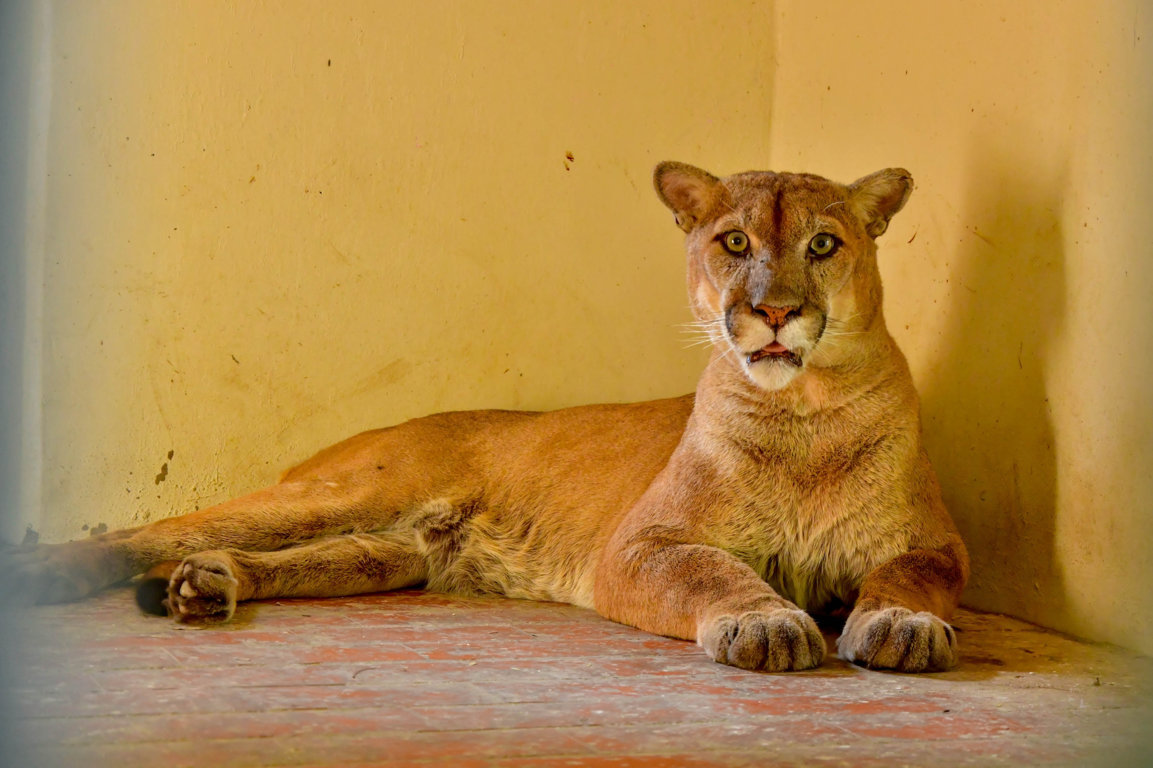
Puma Male has been gifted by Bahria Town Karachi in March, 2024 his age around 8-10 years old.
Overview
The puma (Puma concolor), also known as the cougar, mountain lion, or panther, is a large, solitary cat native to the Americas. Renowned for its adaptability and wide distribution, the puma inhabits various environments, from the Canadian Yukon to the southern Andes in South America. Despite its wide range, the puma is elusive and seldom seen by humans, contributing to its mystique.
Physical Characteristics
Appearance
Pumas are powerful, agile cats with a sleek, muscular build:
- Size: Adult pumas typically weigh between 64 to 220 pounds (29 to 100 kilograms) and measure up to 8 feet (2.4 meters) in length, including the tail.
- Coat: Their fur is short and typically a uniform tawny or grayish color, providing effective camouflage in their natural habitats.
- Tail: Pumas have long, cylindrical tails, which help with balance and agility, especially when navigating rugged terrain.
Adaptations
Pumas possess several adaptations that make them effective predators:
- Powerful Limbs: Their strong, muscular legs enable them to make powerful leaps, often covering distances of up to 40 feet (12 meters) in a single bound.
- Sharp Claws and Teeth: Retractable claws and sharp teeth are crucial for catching and subduing prey.
- Keen Senses: Excellent vision, hearing, and a strong sense of smell aid in hunting and avoiding danger.
Habitat
Range
Pumas have the largest range of any wild terrestrial mammal in the Western Hemisphere:
- North America: Found in diverse habitats, from coastal forests to arid deserts and mountainous regions.
- Central and South America: Inhabit tropical rainforests, savannas, and temperate forests.
Habitat Preferences
Pumas are highly adaptable and can thrive in a variety of environments:
- Forests: Dense forests provide cover and abundant prey.
- Mountains: Mountainous regions offer rugged terrain and a variety of prey species.
- Deserts and Grasslands: Pumas can survive in arid environments with sparse vegetation.
Diet and Hunting
Carnivorous Diet
Pumas are obligate carnivores, primarily preying on medium to large-sized mammals:
- Primary Prey: Deer are the mainstay of the puma’s diet in many regions. They also hunt elk, moose, and bighorn sheep.
- Secondary Prey: Smaller animals, such as rabbits, hares, rodents, and birds, supplement their diet when larger prey is scarce.
Hunting Techniques
Pumas are ambush predators, relying on stealth and strength:
- Stalking: They silently stalk their prey, using vegetation and terrain for cover.
- Ambush and Attack: With a powerful leap, pumas pounce on their prey, delivering a fatal bite to the neck or skull.
- Feeding: After a successful hunt, pumas often drag their kill to a secluded spot to eat and may cover it with leaves or dirt to return to later.
Behavior and Social Structure
Solitary Lifestyle
Pumas are solitary animals, with adults typically coming together only to mate:
- Territoriality: They maintain large territories, which can range from 10 to 370 square miles (26 to 960 square kilometers), depending on the availability of prey and habitat quality.
- Home Range: Males have larger territories that overlap with those of several females, while females’ ranges are smaller and often overlap with their offspring’s.
Communication
Pumas communicate through vocalizations, scent markings, and body language:
- Vocalizations: Although generally silent, pumas can produce a variety of sounds, including growls, hisses, purrs, and screams, particularly during the mating season.
- Scent Marking: They use scent marks, such as urine and feces, to delineate territory and signal reproductive status.
Reproduction
Pumas have a polygynous mating system, where one male mates with multiple females:
- Breeding Season: Pumas can breed year-round, but there is often a peak in late winter to early spring.
- Gestation and Birth: The gestation period is about 90 to 96 days, after which the female gives birth to 2 to 4 kittens in a secluded den.
- Raising Young: Kittens are born blind and helpless, relying on their mother for warmth and food. They stay with their mother for up to 18 months, learning essential survival skills.
Conservation Status
Threats
Pumas face several threats that impact their populations:
- Habitat Loss: Urbanization, agriculture, and infrastructure development fragment their natural habitats.
- Human-Wildlife Conflict: Pumas sometimes prey on livestock, leading to conflicts with farmers and ranchers.
- Hunting and Poaching: In some regions, pumas are hunted for sport, their fur, or in retaliation for livestock predation.
Conservation Efforts
Various measures are being implemented to protect pumas:
- Habitat Conservation: Protecting and restoring natural habitats ensures that pumas have the space and resources they need to thrive.
- Conflict Mitigation: Programs to reduce human-wildlife conflict, such as livestock protection strategies and compensation schemes for farmers, help coexistence.
- Legal Protection: Laws and regulations that prohibit hunting and trading pumas are crucial for their conservation.
Fun Facts
- Great Leapers: Pumas are incredible jumpers, capable of leaping 15 feet (4.5 meters) vertically and 40 feet (12 meters) horizontally.
- Elusive Predators: Despite their wide range, pumas are rarely seen by humans due to their solitary and elusive nature.
- Multiple Names: Pumas are known by many names, including cougar, mountain lion, panther, and catamount, depending on the region.
By understanding the unique characteristics and ecological importance of pumas, visitors can appreciate these elusive and powerful cats and support efforts to conserve them for future generations.