
HABITAT
Indian subcontinent
DIET
mammals, birds, reptiles, and amphibians indiscriminately, but seem to prefer mammals
LITTER SIZE
12 to 36 eggs
GESTATION PERIOD
73 to 76 days
AVERAGE LIFE SPAN
30 Years
AGE AT KARACHI ZOO
15 & 20 years
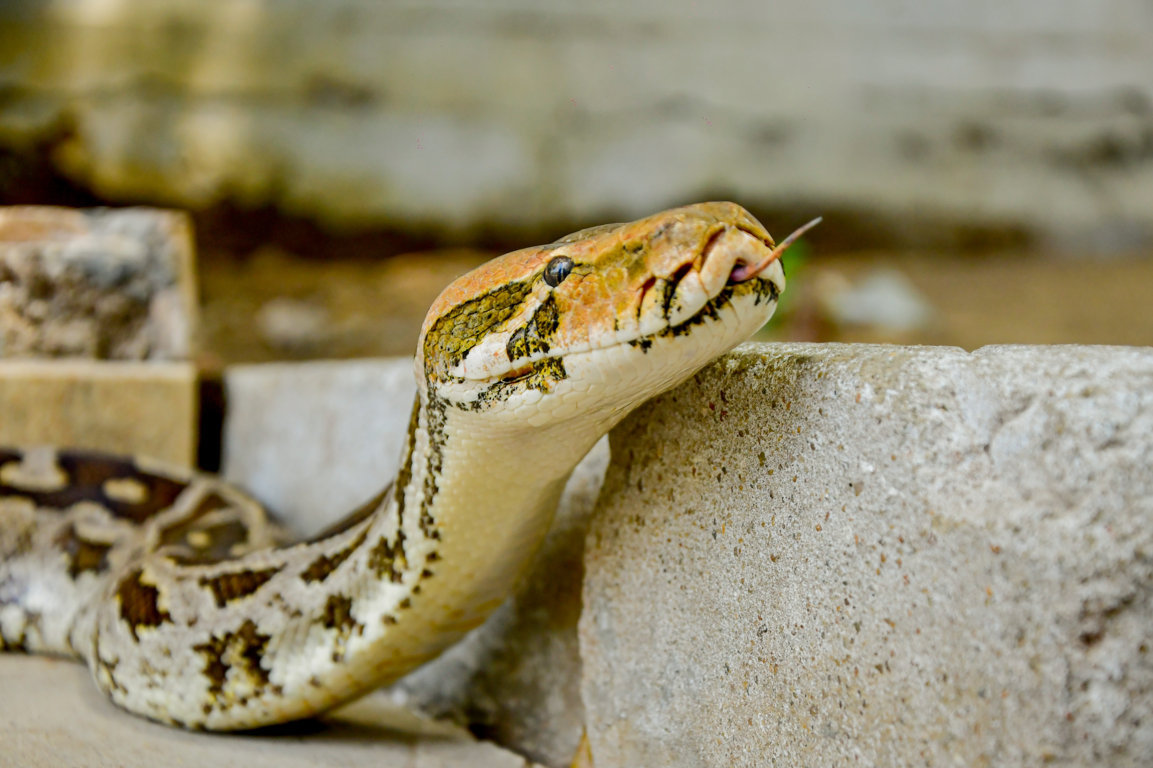
The Indian Python (python molorus) is a large non-venomous snake found in India, Sri Lanka and parts of South East Asia. It is a member of pythonidae family and is also known as the Indian Rock Python. they are solitary animals only coming together to meet. Python can grow upto 20 feet (6 meters in length) making them one of the largest snakes in the region.
Overview
Pythons are a group of non-venomous snakes found in Africa, Asia, and Australia. Known for their impressive size and strength, these constrictors are among the largest snakes in the world. Pythons are fascinating reptiles with unique adaptations that make them skilled hunters and survivors in various environments.
Physical Characteristics
Appearance
Pythons exhibit diverse physical traits depending on the species, but they share some common characteristics:
- Size: Pythons vary significantly in size. The reticulated python (Python reticulatus) is the longest snake, reaching lengths of up to 30 feet (9 meters). Other species, like the ball python (Python regius), are much smaller, typically measuring 3 to 6 feet (0.9 to 1.8 meters).
- Coloration: Their coloration ranges from earthy browns and greens to vibrant yellows and golds, often with intricate patterns that provide excellent camouflage.
- Head and Eyes: Pythons have large heads relative to their bodies, with heat-sensing pits around their jaws that help detect warm-blooded prey. Their eyes have vertical slit pupils, providing sharp vision, especially in low light.
Adaptations
Pythons possess several adaptations that make them effective predators:
- Muscular Bodies: Their strong, muscular bodies enable them to constrict and subdue prey.
- Flexible Jaws: They have highly flexible jaws that allow them to swallow prey much larger than their head.
- Camouflage: Their patterned scales provide effective camouflage in their natural habitats, helping them ambush prey.
Habitat
Range
Pythons inhabit a variety of regions across Africa, Asia, and Australia:
- Geographic Range: They are found in tropical and subtropical regions, including rainforests, savannas, grasslands, and swamps.
Habitat Preferences
Pythons are highly adaptable and can thrive in diverse environments:
- Forests and Woodlands: Dense vegetation offers cover and abundant prey.
- Grasslands and Savannas: Open areas with scattered trees and shrubs provide hunting grounds.
- Wetlands and Swamps: Some species, like the Burmese python (Python bivittatus), are well-adapted to aquatic environments.
Diet and Hunting
Carnivorous Diet
Pythons are carnivores, feeding on a variety of animals:
- Primary Prey: They primarily eat small to medium-sized mammals, birds, and reptiles. Larger pythons can take down bigger prey, such as antelope and pigs.
- Occasional Prey: Depending on the species and availability, they may also eat amphibians, fish, and invertebrates.
Hunting Techniques
Pythons are ambush predators, relying on stealth and strength:
- Ambush: They lie in wait for prey to come within striking distance, using their camouflage to remain undetected.
- Constricting: After seizing their prey with their sharp teeth, pythons wrap their powerful coils around the animal, constricting it until it suffocates.
- Swallowing: Using their flexible jaws, pythons swallow their prey whole, headfirst.
Behavior and Social Structure
Solitary Lifestyle
Pythons are primarily solitary animals, coming together only for mating:
- Territoriality: They are generally non-territorial but may compete for resources like food and mates.
- Home Range: Pythons have a home range that they patrol in search of food, but they do not defend it aggressively.
Communication
Pythons communicate through a combination of behaviors and chemical signals:
- Scent Marking: They use pheromones to signal reproductive readiness and mark their presence.
- Body Language: Specific movements and postures can indicate aggression, submission, or mating readiness.
Reproduction
Reproductive behaviors and strategies vary among python species:
- Mating Season: Mating typically occurs during the warmer months when food is more abundant.
- Egg Laying: Female pythons are oviparous, laying clutches of eggs in secure, warm locations. They may lay anywhere from a few dozen to over a hundred eggs, depending on the species.
- Parental Care: Some species, like the Burmese python, exhibit maternal care, with the female coiling around the eggs to protect and incubate them until they hatch.
Conservation Status
Threats
Pythons face several threats that impact their populations:
- Habitat Loss: Deforestation, agriculture, and urbanization reduce their natural habitats.
- Hunting and Poaching: Pythons are hunted for their skins, meat, and for the pet trade.
- Invasive Species: In some regions, invasive species pose a threat to native python populations by competing for resources and introducing diseases.
Conservation Efforts
Efforts to protect python species include:
- Habitat Protection: Establishing and managing protected areas helps conserve their habitats.
- Regulation of Trade: Laws and regulations to control the trade of pythons and their products aim to reduce illegal hunting and poaching.
- Research and Monitoring: Ongoing research and monitoring help understand population trends and inform conservation strategies.
Fun Facts
- Record Holders: The reticulated python holds the record for the longest snake, while the anaconda, a close relative, is the heaviest.
- Unique Adaptations: Pythons can go months without eating after a large meal, thanks to their slow metabolism and efficient digestive systems.
- Ancient Lineage: Pythons have been around for millions of years, with fossil evidence dating back to the Eocene epoch.
By understanding the unique characteristics and ecological importance of pythons, visitors can appreciate these fascinating reptiles and support efforts to conserve them for future generations.