
HABITAT
Pakistan, India
DIET
Lucerne Grass, Grains Wheat Brawn, Channa Chilka, Daal Chana, Jaggery
LITTER SIZE
1 No.
GESTATION PERIOD
226 Days
AVERAGE LIFE SPAN
20-30 Years
AGE AT KARACHI ZOO
1 to 15 years
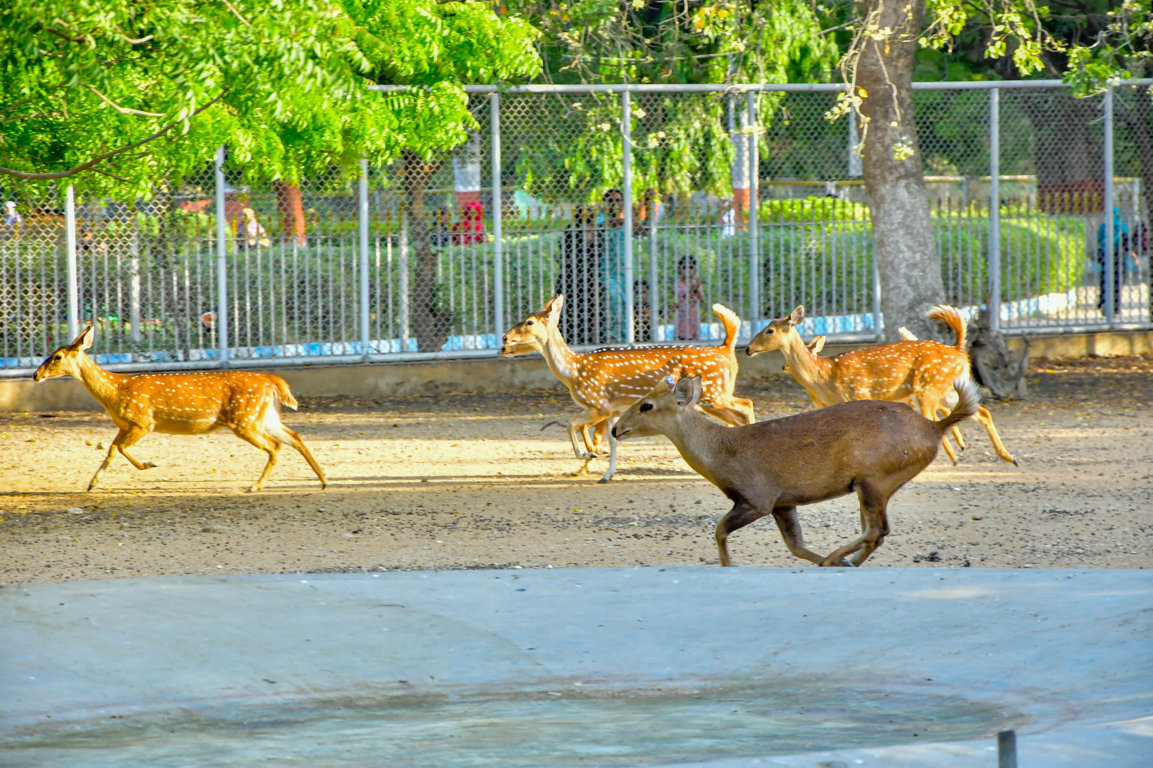
This species locally known as Chital, known for their striking white spots on a reddish brown coat, in the nature this species famous for its contribution for maintaining echo system by disbursing seeds and forest diversity.
Overview
The Spotted Deer, also known as the Chital (Axis axis), is a species of deer native to the Indian subcontinent. Recognized for its elegant appearance and distinctive coat pattern, the Spotted Deer is a common sight in forests, grasslands, and open woodlands throughout its range. These deer are known for their social behavior, agility, and adaptability to various habitats.
Physical Characteristics
Appearance
Spotted Deer are easily recognizable by their unique coat pattern:
- Coat: They have a reddish-brown coat adorned with white spots, which vary in size and density among individuals.
- Size: Adults typically stand about 32 to 35 inches (80 to 90 centimeters) at the shoulder and weigh between 130 to 180 pounds (60 to 80 kilograms).
- Antlers: Only males (bucks) possess antlers, which are relatively small and typically have three points.
Coat Pattern
The spotted coat provides effective camouflage in their natural habitat:
- Camouflage: The white spots on their coat break up their outline, helping them blend into dappled sunlight and dense vegetation.
Habitat
Range
Spotted Deer are native to the Indian subcontinent:
- Geographic Range: They are found in India, Nepal, Bangladesh, Sri Lanka, and parts of Southeast Asia.
- Introduced Populations: Due to their popularity, they have been introduced to various other regions with suitable habitats.
Habitat Preferences
Spotted Deer inhabit diverse habitats:
- Forests: They are commonly found in deciduous forests, mixed woodlands, and tropical rainforests.
- Open Grasslands: They also thrive in open grassy areas and floodplains near water sources.
Diet and Foraging
Herbivorous Diet
Spotted Deer are herbivores with a varied diet:
- Plants: They primarily feed on grasses, leaves, shoots, fruits, and flowers.
- Seasonal Variation: Their diet may vary seasonally based on the availability of different plant species and nutritional needs.
Foraging Behavior
Spotted Deer are primarily browsers and grazers:
- Browsing: They use their agile tongues and lips to select and consume leaves and shoots from bushes and trees.
- Grazing: They also feed on grasses and herbs found in open areas and along forest edges.
Behavior and Social Structure
Social Behavior
Spotted Deer exhibit complex social dynamics:
- Group Structure: They live in herds, which vary in size from a few individuals to larger groups of up to 30 or more.
- Mixed Groups: Herds often include females (does), juveniles, and subadult males, with dominant males (bucks) defending territories.
Communication
Communication among Spotted Deer involves vocalizations and body language:
- Vocalizations: They produce various calls, including alarm barks, grunts, and snorts, to signal danger or establish social hierarchies.
- Visual Signals: Tail flicking, ear movements, and postures convey information about their mood and intentions.
Reproduction
Reproductive behavior occurs during specific times of the year:
- Mating Season: Bucks compete for access to females during the rut, which typically occurs in the cooler months.
- Gestation and Birth: After a gestation period of around 7 to 8 months, females give birth to a single fawn, which remains hidden in vegetation for protection.
Conservation Status
Threats
Spotted Deer face several threats that impact their populations:
- Habitat Loss: Deforestation, agricultural expansion, and human development reduce their natural habitats.
- Poaching: They are hunted for their meat, hide, and antlers in some regions.
- Human-Wildlife Conflict: Encounters with humans, including vehicle collisions and predation on crops, pose risks.
Conservation Efforts
Efforts to protect Spotted Deer include:
- Protected Areas: Establishing and managing wildlife sanctuaries, national parks, and reserves to conserve their habitats.
- Community Engagement: Involving local communities in conservation efforts and promoting sustainable land use practices.
- Research and Monitoring: Studying population trends and behavior to inform conservation strategies and management practices.
Fun Facts
- Adaptability: Spotted Deer are adaptable to a range of habitats, from dense forests to open grasslands, and can thrive in human-altered landscapes.
- Molt Patterns: They undergo seasonal molting, shedding their coats to adapt to changing environmental conditions.
- Cultural Significance: In Hindu mythology, the Spotted Deer is associated with various gods and represents grace and agility.
By understanding the unique characteristics and ecological roles of Spotted Deer, visitors can appreciate these graceful animals and support efforts to conserve them for future generations.