
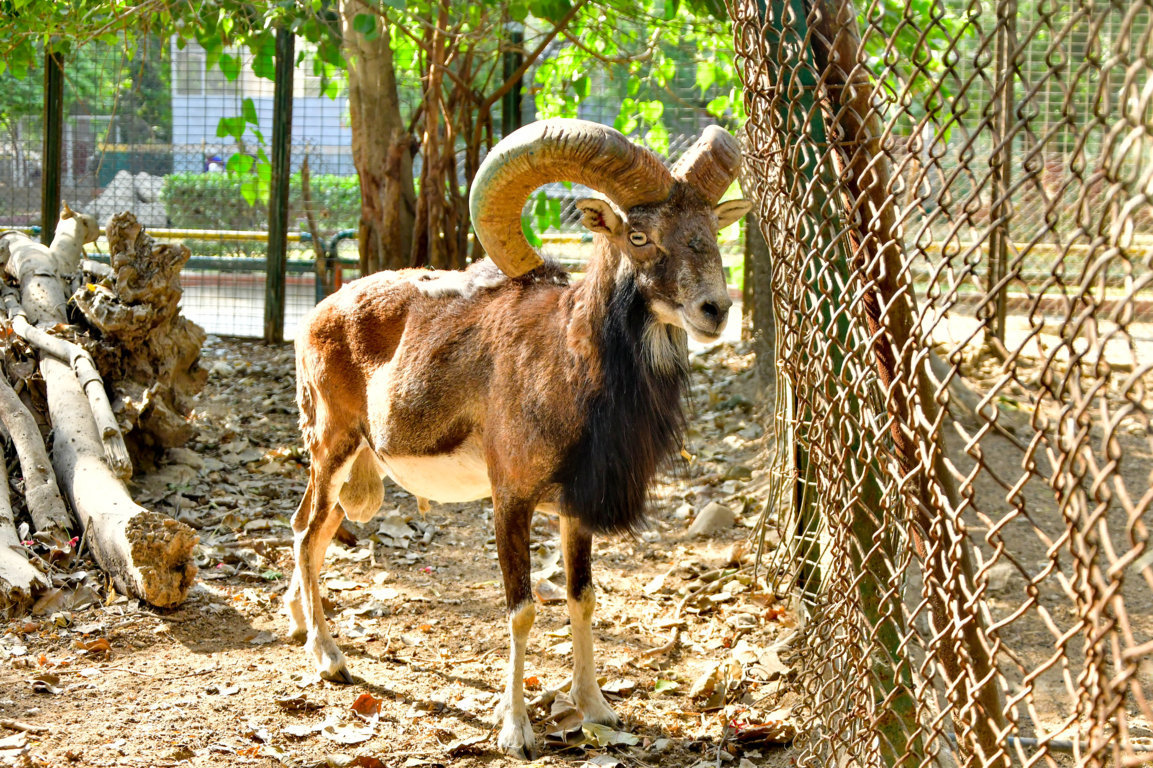
Denny – (8 Years Old)
HABITAT
Africa
DIET
Lucerne Grass, Grains Wheat Brawn, Channa Chilka, Daal Chana, Jaggery
LITTER SIZE
1 No.
GESTATION PERIOD
150-160 Days
AVERAGE LIFE SPAN
8-12 Years
AGE AT KARACHI ZOO
2-8 Years
A pair of Urial name Mr.&Mrs. Denny aged 8&6 Years respectively is a series of Gift by Bahria Town Karachi in January 2024.
Overview
The Urial (Ovis vignei) is a species of wild sheep native to the mountains of Central Asia. Known for their impressive horns and adaptive abilities, Urials inhabit rugged terrain and are adapted to survive in harsh environments. These sheep play a significant ecological role as herbivores, shaping vegetation and contributing to the biodiversity of their habitats.
Physical Characteristics
Appearance
Urials display distinct physical traits:
- Size: They are medium-sized sheep, with males (rams) typically larger than females (ewes).
- Coat: Their thick coat varies in color from light gray to reddish-brown, providing insulation against cold temperatures.
- Horns: Both males and females have horns, but those of males are larger and curl outward in a spiral pattern, while females’ horns are shorter and less curved.
Adaptations
Urials are well-adapted to mountainous habitats:
- Hooves: Their split hooves provide traction and agility on rocky slopes.
- Behavioral Adaptations: They are agile climbers and can navigate steep terrain to access food and escape predators.
Habitat
Range
Urials inhabit mountainous regions of Central Asia:
- Geographic Range: They are found in countries such as Pakistan, India, Afghanistan, Tajikistan, Uzbekistan, and Kazakhstan.
- Habitat Preference: They prefer open grasslands, alpine meadows, and rocky slopes at elevations ranging from 1,000 to 4,500 meters (3,300 to 14,800 feet).
Habitat Preferences
They thrive in diverse mountain ecosystems:
- Seasonal Movements: Urials may migrate seasonally to higher elevations in summer and lower elevations in winter, following food availability and weather patterns.
- Shelter: They seek shelter in rock crevices and caves to protect themselves from extreme weather conditions and predators.
Diet and Feeding
Herbivorous Diet
Urials are herbivores with a specialized diet:
- Plant Matter: They primarily graze on grasses, herbs, shrubs, and low-lying vegetation, adapting their diet to seasonal changes and availability.
- Water Requirements: They obtain moisture from vegetation and snow during winter, requiring less dependence on standing water sources.
Foraging Behavior
They exhibit specific foraging habits:
- Grazing: Urials graze for several hours each day, using their keen sense of smell and sight to locate nutritious plants and avoid toxic ones.
- Browsing: They also browse on leaves, twigs, and buds, depending on plant availability and nutritional content.
Behavior and Social Structure
Social Behavior
Urials exhibit social structures adapted to their environment:
- Group Dynamics: They form small herds consisting of females, juveniles, and a dominant male (ram), with younger males forming bachelor groups.
- Mating Season: During the breeding season (rut), dominant males compete for access to females through displays and battles.
Communication
Communication among Urials involves various vocalizations and behaviors:
- Vocal Calls: They use bleats, snorts, and alarm calls to communicate danger, dominance, and reproductive readiness.
- Visual Signals: Head movements, postures, and horn displays convey social status and territorial boundaries within herds.
Reproduction
Reproductive behavior follows seasonal patterns:
- Breeding Season: The rut occurs in autumn, with dominant males competing for mating rights with females in estrus.
- Gestation and Birth: After a gestation period of about 160 to 170 days, females give birth to single or occasionally twin lambs in spring, ensuring offspring survival during favorable weather and food conditions.
Conservation Status
Threats
Urials face conservation challenges in their native habitats:
- Habitat Loss: Human activities, including agriculture, grazing, and infrastructure development, fragment and degrade their mountainous habitats.
- Poaching: Illegal hunting for meat, horns, and traditional medicine threatens local populations despite legal protections.
- Climate Change: Shifts in temperature and precipitation patterns affect vegetation growth and water availability, impacting Urial habitat suitability.
Conservation Efforts
Efforts to protect Urials include:
- Protected Areas: Establishing and managing national parks, reserves, and wildlife sanctuaries to conserve critical habitats and reduce human-wildlife conflicts.
- Community Engagement: Involving local communities in conservation initiatives, promoting sustainable land use practices, and mitigating human-wildlife conflicts.
- Research and Monitoring: Conducting scientific research on population dynamics, habitat requirements, and genetic diversity to inform conservation strategies and policy decisions.
Fun Facts
- Adaptability: Urials have adapted to survive in extreme environments, demonstrating resilience to cold temperatures and sparse vegetation.
- Cultural Significance: They hold cultural significance in Central Asian folklore and traditional practices, symbolizing resilience, agility, and natural beauty.
- Conservation Success: Conservation efforts have led to population stabilization and recovery in some protected areas, highlighting the effectiveness of targeted conservation actions.
By understanding the unique characteristics and ecological importance of Urials, visitors can appreciate their role in mountain ecosystems and support efforts to conserve these iconic wild sheep for future generations.